Sunscreen Explained: SPF, Broad-Spectrum Protection, UVA vs UVB, and Mineral vs Chemical Sunscreens

If you’ve ever stood in the sunscreen aisle staring at dozens of bottles wondering which one to choose, you’re not alone.
SPF 30. SPF 50. Broad-spectrum. Mineral. Chemical. Water-resistant. Sensitive skin. The options seem endless, and the marketing claims can make it feel like you need a degree in dermatology just to pick the right sunscreen.
At BlossomMD in San Ramon, we get sunscreen questions all the time. Some patients want to know which sunscreen is best after a treatment. Others wonder if sunscreen is really necessary when they’re mostly indoors. Many are surprised to learn that the sun can affect their skin even on cloudy days or while driving in the car.
One conversation, however, comes up more than any other.
A patient will invest in their skin. They might start a new skincare routine, schedule a HydraFacial, try BioRePeel, or finally address the pigmentation concerns they’ve struggled with for years. Then they’ll ask:
“What can I do to make these results last?”
The answer is simple, and almost always the same.
Wear sunscreen.
It may not be the most glamorous step in your skincare routine, but it is arguably the most important. Daily sun protection helps prevent premature aging, supports an even skin tone, and protects the investment you’re making in your skin.
Let’s break down exactly why sunscreen matters, what SPF really means, the difference between UVA and UVB rays, and how to choose the right sunscreen for your skin.
Why Is Sunscreen Important?
Most people associate sunscreen with preventing sunburns during a beach vacation. And, while that’s certainly important, sunscreen does so much more than just prevent temporary redness and discomfort.
Daily sunscreen use helps:
⚪ Reduce the appearance of premature aging
⚪ Protect collagen and elastin
⚪ Minimize hyperpigmentation and dark spots
⚪ Help prevent melasma flare-ups
⚪ Reduce cumulative sun damage
⚪ Lower the risk of skin cancer
When it comes to sun exposure, it’s important to remember that damage accumulates over time. It’s not just the occasional day at the beach that affects your skin. It’s also the daily walk to your car, the afternoon spent running errands, or the sunlight coming through your office window.
These small exposures, and the damage to your skin, can add up over months and years.
What Does SPF Mean?
SPF stands for Sun Protection Factor.
Specifically, SPF measures protection against UVB rays, which are primarily responsible for sunburn.
Many people assume that SPF 50 provides dramatically more protection than SPF 30, but the difference is actually smaller than you might think.
👉 The U.S. Food and Drug Administration (FDA) explains that SPF values indicate how well a sunscreen protects against UVB-induced damage under controlled testing conditions.
🔆 SPF 15 blocks approximately 93% of UVB rays
🔆 SPF 30 blocks approximately 97%
🔆 SPF 50 blocks approximately 98%
That’s why it is often recommended to focus on consistent daily use over simply chasing the highest SPF number available.
A higher SPF does not mean you can apply sunscreen once and forget about it for the rest of the day. Reapplication is crucial, especially during prolonged outdoor exposure.
What Is Broad-Spectrum Sunscreen?
Here’s where it can become a bit confusing.
SPF only measures protection against UVB rays.
The SPF actually tells us nothing about any protection from UVA rays.
🔆 That’s why broad-spectrum protection is so important.
Broad-spectrum sunscreen protects against both UVA and UVB radiation, giving your skin more comprehensive protection from the sun’s harmful effects.
Think of SPF as only part of the story. Broad-spectrum protection completes the picture.
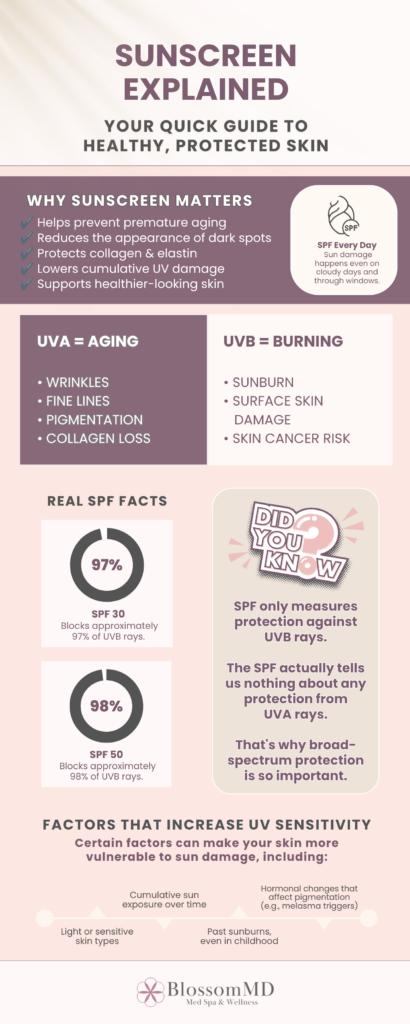
Sunscreen is your daily defense against premature aging, pigmentation, and long-term skin damage. Understanding UVA vs UVB rays and SPF levels helps you make smarter choices for healthier, protected skin year-round.
UVA vs UVB Rays: What’s the Difference?
A simple way to remember the difference is this:
UVA = Aging
UVB = Burning
UVA rays penetrate deeper into the skin and are largely responsible for:
○ Wrinkles
○ Fine lines
○ Collagen breakdown
○ Loss of elasticity
○ Hyperpigmentation
○ Premature aging
UVB rays are primarily associated with:
○ Sunburn
○ Surface skin damage
○ Redness
○ Skin cancer risk
While both types of ultraviolet radiation can contribute to skin cancer, UVA rays are often called the “silent agers” because the damage develops gradually over time.
That’s one reason why broad-spectrum sunscreen is so important. Protecting against UVB rays alone is not enough if your goal is healthy, youthful-looking skin.
Can UV Rays Pass Through Windows?
Many people are surprised to learn that the answer is yes.
While most windows block the majority of UVB rays, UVA rays can still penetrate glass.
That means you may be exposed while:
⚪ Driving
⚪ Sitting near a sunny office window
⚪ Working from home beside natural light
⚪ Spending time indoors near large windows
Another reason why skincare professionals recommend sunscreen as part of your daily morning routine, not just when you’re planning a day outdoors.
Do You Need Sunscreen on Cloudy Days?
Yes. Absolutely.
Cloud cover may reduce visible sunshine, but ultraviolet radiation can still reach your skin.
In fact, many people underestimate sun exposure on overcast days because they don’t feel the heat like you do with direct sunlight.
But, UV damage doesn’t always announce itself with a sunburn. Sometimes it appears over time as fine lines, pigmentation, or changes in skin texture. But the focus of this blog is to demonstrate that much of that damage is preventable.
According to the Skin Cancer Foundation, ultraviolet radiation can penetrate clouds and still contribute to cumulative skin damage, even on overcast days.
This means that daily exposure, whether you feel it or not, can add up significantly over time.
Mineral vs Chemical Sunscreen: What’s the Difference?
One of the most common questions we hear is whether mineral sunscreen is better than chemical sunscreen.
The truth is that both can provide excellent protection when used correctly.
🔆 Mineral Sunscreens
Mineral sunscreens typically contain zinc oxide, titanium dioxide, or both.
Benefits may include:
○ Suitable for sensitive skin
○ Often recommended after aesthetic procedures
○ Broad-spectrum protection
○ Begin working immediately after application
🔆 Chemical Sunscreens
Chemical sunscreens use ingredients that absorb UV radiation before it can damage the skin.
Benefits may include:
○ Lightweight feel
○ Easy application
○ Less visible on the skin
○ Often preferred for daily wear
➤ For most people, the best sunscreen is the one they’ll use consistently every day.
Professional-Grade Sunscreen Options at BlossomMD
Choosing the right sunscreen can feel overwhelming, especially with so many options on the market. At BlossomMD Med Spa in San Ramon, we help simplify that decision by offering specially selected professional skincare products that align with both skin health and treatment outcomes.
We carry carefully selected professional skincare products, including Colorescience, known for its high-quality, broad-spectrum sun protection and elegant, wearable formulations.
These products are frequently recommended for patients having med spa treatments such as HydraFacials, BioRePeel, and microneedling, as they are designed to work in harmony with skin rejuvenation protocols and post-treatment care needs.
During your visit, our providers can help guide you toward the most appropriate sunscreen based on your skin type, sensitivity level, and treatment plan, ensuring your daily SPF supports both protection and long-term results.
How Much Sunscreen Should I Apply?
Using sunscreen is important, but using enough sunscreen is equally important.
Most adults apply significantly less than the amount used during sunscreen testing. So if you’re using the recommendations on your chosen product to guide you, that’s important to keep in mind.
A useful guideline is the “two-finger rule” for the face and neck. Apply sunscreen along the length of your index and middle finger before spreading it evenly over the skin.
Don’t forget areas that are commonly missed:
⚪ Ears
⚪ Neck
⚪ Chest
⚪ Hairline
⚪ Hands
How Often Should You Reapply Sunscreen?
As a general guideline, sunscreen should be reapplied every two hours during outdoor activities.
You should also reapply after:
⚪ Swimming
⚪ Sweating
⚪ Towel drying
⚪ Extended outdoor exposure
Even the best sunscreen cannot provide all-day protection from a single application.
Common Sunscreen Mistakes
Even with best intentions, sunscreen must be used in a way that provides full protection. Here are some of the most common missteps we see:
❌ Applying too little product
❌ Skipping reapplication
❌ Using expired sunscreen
❌ Forgetting the neck and chest
❌ Assuming makeup SPF is enough
❌ Only wearing sunscreen on sunny days
Small adjustments in consistency and application can make a significant difference in long-term skin health.
According to the American Academy of Dermatology, daily sunscreen use is one of the most effective ways to help prevent premature skin aging and reduce skin cancer risk.
Why Sunscreen Matters After Med Spa Treatments
At BlossomMD in San Ramon, many of our med spa treatments are designed to improve skin tone, texture, hydration, and overall skin quality through targeted skin rejuvenation.
Whether you’ve had a HydraFacial, BioRePeel, microneedling treatment, or another advanced skin treatment, proper post-care is essential to support healing and maintain your results.
After treatment, the skin barrier can be temporarily more delicate as it renews and regenerates. During this time, your skin is more susceptible to environmental stressors, including ultraviolet (UV) radiation, visible light, and pollution, all of which can contribute to inflammation, pigmentation, and accelerated aging.
Consistent sunscreen use is one of the most important steps in protecting freshly treated skin. Daily SPF helps minimize the risk of post-inflammatory hyperpigmentation, supports a smoother recovery process, and preserves the improvements achieved through your treatment.
Just as importantly, sunscreen plays a long-term role in maintaining your results. Because even the most advanced med spa treatments cannot outpace ongoing sun damage without proper protection.
Think of sunscreen not as an optional step, but as the daily maintenance plan for your investment in healthy, radiant skin.
Frequently Asked Questions About Sunscreen
🙋♀️ Does sunscreen prevent wrinkles?
💡 Daily sunscreen use can help prevent many of the visible signs of premature aging caused by ultraviolet exposure, including wrinkles and loss of skin elasticity.
🙋♀️ Does sunscreen help prevent dark spots?
💡 Yes. Daily sunscreen use helps prevent new sun-induced dark spots from forming and can help stop existing pigmentation from becoming more pronounced. This is especially important for conditions like melasma and post-inflammatory hyperpigmentation, where UV exposure is a known trigger for flare-ups.
🙋♀️ Is SPF 50 better than SPF 30?
💡 SPF 50 offers slightly more UVB protection than SPF 30, but both can be highly effective when applied correctly and reapplied as needed.
🙋♀️ Do I need sunscreen indoors?
💡 If you’re exposed to sunlight through windows or spend time near natural light throughout the day, daily sunscreen is still recommended.
🙋♀️ Is mineral sunscreen better than chemical sunscreen?
💡 Neither is universally “better.” The best sunscreen is the one that provides broad-spectrum protection and fits comfortably into your daily routine.
🙋♀️ Have a different Question? Message us here!
The Bottom Line
If there is one skincare habit that consistently delivers long-term benefits, it’s daily sunscreen use. As skin care professionals, we cannot emphasize that enough.
You don’t need a complicated routine or a cabinet full of products to make a meaningful difference in your skin’s future. You just need a good, high-quality sun protection product and the commitment to use it faithfully.
A broad-spectrum sunscreen, applied consistently and reapplied when needed, can help protect against premature aging, hyperpigmentation, and cumulative sun damage while supporting the results of your skincare and aesthetic treatments.
Your future skin will thank you for it.
Want to know more? Explore more beauty and wellness topics here on 🌸Blossom Beauty Blog!